Sapphic Vampire Books for Readers Who Loved Carmilla
Nine lesbian vampire novels, from Le Fanu's 1872 original to the retellings still arguing with its ending.
If you loved Carmilla, read S.T. Gibson's An Education in Malice and Kat Dunn's Hungerstone first: both retell it directly. Then go wider with Jewelle Gomez's The Gilda Stories and V.E. Schwab's Bury Our Bones in the Midnight Soil.
Carmilla set the pattern in 1872 and most sapphic vampire fiction still answers to it. A guest arrives by accident and has to be taken in. She sleeps late, eats nothing and will not say where she comes from. The household starts waking up tired. What makes the sapphic version work is that hunger and desire are the same feeling, and nobody in the story can say which one they are looking at. Le Fanu ends his story with a stake and a committee of men restoring order. The best modern books are, in one way or another, arguing with that ending.
Start with the source
Carmilla — J. Sheridan Le Fanu (1872)
Le Fanu serialised the novella in The Dark Blue across 1871–72, then collected it in In a Glass Darkly in 1872. Laura lives with her father in a lonely castle in Styria. A carriage overturns at the gates, and a beautiful girl is left behind to recover. Carmilla is languid, secretive and openly loving, and Laura is drawn to her and frightened of her at once. Meanwhile the peasant girls nearby keep dying. It is short, strange and more explicit than its reputation suggests. You can read Carmilla in full on this site.
Carmilla, retold
An Education in Malice — S.T. Gibson (2024)
Gibson keeps the names and moves them to Saint Perpetua's, an isolated women's college in the Massachusetts hills in the mid-twentieth century. Laura Sheridan arrives as a first-year and falls into a rivalry with Carmilla, the favourite of their poetry professor, De Lafontaine, who has her own designs on Carmilla. The rivalry turns into romance and the college turns out to have teeth. Expect dark academia, erotic tension and a fair amount of blood. Reviewers disagree about it. The Lesbrary loved the prose, while another review found Laura's and Carmilla's alternating narration hard to tell apart. If you like heightened, perfumed prose, you'll probably side with the fans.
Hungerstone — Kat Dunn (2025)
This is the most faithful of the retellings in shape, and the angriest in spirit. Lenore has been married to Henry, a steel magnate, for ten years. There is no child and not much love. They take a remote country house called Nethershaw so Henry can host a hunt, and a carriage accident near the gates delivers Carmilla into Lenore's life. She is pale and weak by day and very much alive at night. Then village girls start falling ill. Whether Carmilla is the danger or Lenore's way out of a bad marriage is the question the novel keeps open. It is gothic horror with a sapphic romance at its centre, set among new industrial money and the people it uses up.
The Countess Doesn't Drink Wine — Imogen Thorne
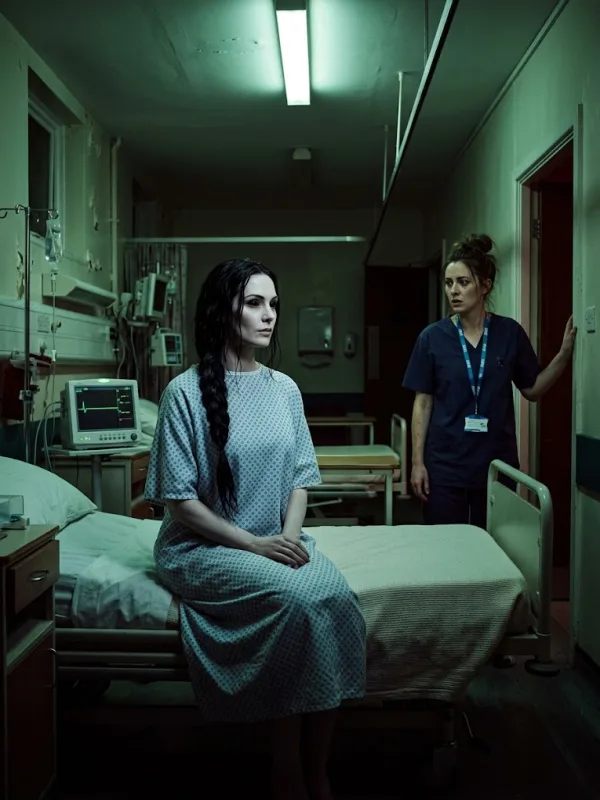
The Countess Doesn't Drink Wine is a NovelMyth original serial, free to read, three chapters so far. It is set on a night ward in a modern English hospital. At 03:12 the heart monitor of an unidentified woman, brought in from a cemetery in the rain, flatlines. Nell Harrow, the night nurse, runs in to find her sitting upright. She apologises and says she was asleep. Then she turns down a blood transfusion and three units of O negative disappear from the fridge, signed out in Nell's name.
The only thing the woman arrived with is an 1872 copy of In a Glass Darkly. Someone has written No in its margins twelve times. What Carmilla fans will notice is the reversal: the vampire, Ilse, is the one keeping her distance. Nell is the one reaching out, and she gets told do not do that in return. It's a slow burn. So far it's all tension: a touch to the cheek, a pulse taken on a doorstep, and nothing more.
Countesses, hunger and big houses
House of Hunger — Alexis Henderson (2022)
Marion Shaw has grown up poor. She answers a newspaper advertisement for a "bloodmaid" in the far North, where nobles drink their servants' blood. Her new mistress is Countess Lisavet Bathory, who must drink the blood of healthy young women to survive an inherited illness. Marion ends up in Lisavet's bed and in a rivalry with the house's First Bloodmaid. Then the other girls start vanishing. This is the darkest of the countess-and-companion stories here. The romance runs on a large imbalance of power, and the book leaves you to judge whether Lisavet's feelings are real. It's also bloody, from start to finish.
Thirst — Marina Yuszczuk (2020; English 2024)
The novel first appeared in Argentina as La sed and was translated into English by Heather Cleary. It is split in two. In the first half a vampire flees Europe in the nineteenth century and lands on the coast of Buenos Aires. She watches the city grow up around her and learns to hide. The second half belongs to a present-day woman whose mother is dying. She meets the vampire in a cemetery, and something catches between them. This isn't a romance in the modern genre sense. It's about grief and appetite, with sex and violence on the page. Even reviewers who admired it found the pacing slow in places, so treat it as a book to sink into over a few nights, not one to binge.
Centuries of wanting
The Gilda Stories — Jewelle Gomez (1991)
This is the classic every list should include, and it is a different kind of vampire book. In 1850 a girl escapes slavery in Louisiana and is taken in at a brothel run by Gilda, a vampire, and Bird, a Lakota woman who is Gilda's lover and a vampire too. The girl eventually takes Gilda's name. The book follows her through linked episodes from the 1850s to 2050. Gomez's vampires take blood and leave something good behind in exchange, so this is neither horror nor erotica so much as a long, tender search for family. It won two Lambda Literary Awards in 1992. Publishers Weekly was unimpressed on release, and the book has outlasted that review by thirty years.
Bury Our Bones in the Midnight Soil — V.E. Schwab (2025)
Schwab braids together three women. One starts as María, a young wife trapped in a marriage in sixteenth-century Spain. One is Charlotte, sent to London in the nineteenth century after being caught kissing her friend. One is Alice, a Boston student in 2019 who wakes up changed after a night with a woman. All three end up as vampires, and what joins them is love that curdles into ownership. This is the closest descendant of Carmilla's possessive "you are mine". It's long and dark, and at least one reviewer found the modern chapters weaker than the historical ones.
Lucy Undying — Kiersten White (2024)
This is a Dracula book, but it belongs here. Lucy Westenra, the count's most famous victim, tells her own story. That includes her love for Mina, and her long life afterwards trying to get free of the man who made her. In present-day London, Iris is clearing out her family's mansion and finds Lucy's diary. The present-day romance is between Lucy and Iris. It's sapphic gothic horror that doesn't flinch from violence. Some reviewers felt the final quarter turned predictable. It's still a good bridge if you came to Carmilla through Dracula.
When you want the fangs without the dread
Love Bites — Ry Herman (2020)
Chloë is two years out of a bad marriage and rarely leaves the house. Dragged to a goth club, she meets Angela, an astronomy PhD student who has no pulse and does not eat. Angela was turned by a girlfriend she has since escaped, and she feeds as gently as she can. Herman plays this as a romantic comedy set at the end of the 1990s. The vampire is a person with a complicated condition, not a monster. After four or five of the books above, it's a relief.
FAQ
Which book is closest to the original Carmilla?
Hungerstone. It keeps the carriage accident, the convalescent guest and the sickening village girls, and it moves them into an unhappy industrialist's marriage. An Education in Malice keeps the names but tells a new story, and The Countess Doesn't Drink Wine puts the original book itself into the plot.
Are these books spicy?
It varies a lot. House of Hunger, An Education in Malice and Thirst all have sex and blood on the page and lean dark. The Gilda Stories is more tender than erotic, and Love Bites is a comedy. Check content notes for House of Hunger in particular, because its romance runs on an employer–servant power imbalance.
Is Carmilla itself worth reading if I've only seen adaptations?
Yes. It runs to about a hundred pages and moves quickly. Most adaptations soften what's in the text. Laura's mix of attraction and dread is written much more plainly than people expect from 1872, and the ending is bleak in a way that modern retellings are still arguing with.